
Why 2026 Demands a New RevOps Approach
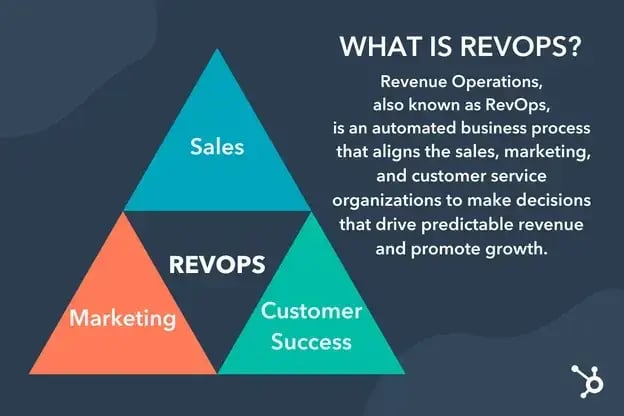
B2B companies start 2026 under increased pressure: unstable forecasts, tight budgets, longer buying cycles, data explosion, and new AI constraints. The RevOps (Revenue Operations) function becomes the central pillar for Sales–Marketing–CS alignment and revenue management.
The reality is simple: most organizations approach 2026 with an ungoverned HubSpot filled with inconsistencies. Result: no reliable forecasting, inflated pipeline, and a CFO who no longer trusts the numbers. RevOps trends for 2026 demand profound transformation of your revenue engine.
This RevOps approach transforms growth into a measurable and predictive process, aligning all sales, marketing, and customer service teams on a common strategy.
The mission: create a single source of truth for all your revenue teams.
Symptoms of a Non-Standardized HubSpot
Most Frequent Signals
Duplicated or unused properties in your CRM Scoring disconnected from field reality Different pipelines across teams Non-mandatory critical fields Incomplete or misleading reporting Inconsistent data across countries / business units Complete absence of data governance
In RevOps audits, we observe on average for our clients:
20 to 40% unused properties 15% duplicates in contacts 0 naming standards 1 different pipeline per team → guaranteed chaos
These data quality problems prevent any effective RevOps strategy and limit your ability to scale your business. Without clean data, impossible to improve customer retention or optimize the customer journey.
RevOps Fundamentals: Properties, Pipelines, Nomenclature
Properties (Property Management)
Objective: simple and governed architecture. Fundamentals include:
Global properties (persona, scoring, lifecycle) Mandatory fields at each stage Strict limitation on creating new properties Data governance to ensure quality
This data governance is essential to build a solid foundation for your high-performing revenue engine and make better decisions based on clean data.
Pipelines (Deal & Ticket)
One pipeline = one method. In 2026, the trend: reduce the number of pipelines to improve data reliability and forecasting. This pipeline optimization improves predictions and team alignment.
Each pipeline must reflect your actual process and facilitate decision-making at each stage. It's a major competitive advantage.
Nomenclature (Naming Conventions)
Rules for naming: properties, workflows, lists, dashboards, sequences, deals. Without nomenclature → no scalability. This standardization is one of the key principles of RevOps and ensures all your revenue teams speak the same language across the organization.
How to Deploy a RevOps Strategy: The 2026 Method
Step 1 - Complete RevOps Audit
Analysis of: pipelines, properties, scoring, workflows, data quality, governance & permissions. This audit identifies friction points and opportunities to improve your processes.
The expertise of a RevOps consultant enables rapid identification of priority actions according to your needs and growth vision.
Step 2 - Redesign Pipelines & Lifecycle
Objective: standardize cycles, reduce redundancies, improve customer engagement. This RevOps transformation aligns the customer journey with your revenue growth objectives.
Step 3 - Data Cleaning + Governance
Property deletion/merging Deduplication (HubSpot AI) Validation rules for clean data RevOps committee for governance
Data hygiene becomes a priority to ensure decisions based on reliable data. It's the solution to transform your CRM data into actionable insights that generate results.
Step 4 - Nomenclature Standardization
Naming = governing. All assets must follow the same model. This implementation guarantees long-term consistency and facilitates collaboration between teams.
Step 5 - Data Quality Automation
Workflows for: cleaning, validation, anomalies, completion of key properties. Automation frees your teams from repetitive manual tasks and improves continuous data hygiene.
This automation ensures your data quality remains high without constant effort.
Step 6 - Predictive Forecasting Implementation
Based on: clean data, standardized pipelines, HubSpot AI, intelligent scoring. Predictive forecasting transforms your ability to predict revenue accurately and create predictable growth.
Direct Impact on Forecast and Revenue
Benefits Measured with Our Clients
+20 to +40% forecasting accuracy More reliable pipeline, fewer "fake deals" Alignment of Sales, Marketing, CS teams Better segmentation → higher conversions Reporting dashboards usable by executives
These results demonstrate how RevOps transforms revenue operations into a measurable and predictive growth engine. The impact on the company is direct and measurable.
Which RevOps Tools to Use in 2026: Best Software
Data Quality Command Center
To monitor duplicates, anomalies, corrupted properties. This tool centralizes data quality control and provides real-time insights.
AI Deduplication (HubSpot 2026)
Automated cleaning of contacts and companies through artificial intelligence. AI transforms data hygiene into a continuous process and improves your customer data quality.
AI Forecasting & Predictive Models
To improve revenue predictions. These RevOps tools integrate machine learning for accurate forecasting predictions.
Governance Tools & Permission Sets
To structure data access by role. This governance ensures security and consistency of your technology ecosystem.
Pipeline Rules + Validation Cards
To guide sales teams step by step. These rules automate validation and reduce human errors in your pipeline.
These software solutions form your RevOps stack and ensure continuous optimization of your operational processes.
How Does AI Impact RevOps in 2026
The impact of AI on RevOps is major. Artificial intelligence amplifies both errors and good data. This is why data quality becomes critical for your company.
AI enables:
Predictive forecasting with increased accuracy Automation of customer data cleaning Automatic anomaly detection in pipelines Intelligent lead scoring Churn prediction and customer retention optimization
This technological transformation requires clean data to be effective. The modern RevOps approach integrates AI at each stage of the process to create a data-driven organization.
How to Choose a RevOps Agency in 2026: The Guide
RevOps Agency Selection Criteria
Certified HubSpot and RevOps operations expertise Experience in RevOps transformation Operational implementation support capacity Mastery of best data governance tools Client references with measurable results and proven skills
The agency must understand your growth objectives and propose a RevOps strategy to align your sales, marketing, and customer service teams. Consulting and support must cover the entire transformation project.
Look for a top-tier agency offering strategic vision and operational expertise to deploy your RevOps strategy.
How to Improve Customer Retention with RevOps
Customer retention is directly impacted by your data quality and team alignment.
RevOps enables customer retention optimization:
360° view of customer journey and lifecycle Early detection of churn signals through data Automation of customer follow-up processes Customer experience optimization at every touchpoint Coordination between Sales, Marketing, and Customer Success
This approach transforms retention into a measurable process and improves customer lifetime value. Team collaboration ensures a consistent customer experience that generates long-term value.
Conclusion: The RevOps Mission for 2026
2026 marks the rise of RevOps, now essential to manage a reliable, aligned, and predictive HubSpot system. The companies that win are not those accumulating tools, but those mastering data quality and consistency.
This RevOps strategy to align your teams transforms your revenue operations into a predictable growth engine. Team alignment, data governance, and AI use for forecasting become essential fundamentals.
The mission: create a data-driven organization where every decision relies on reliable insights and where teams work together. The best results come from a structured RevOps approach integrating automation, collaboration, and continuous optimization to generate measurable growth.
FAQ
1. Why Is Data Quality Critical in 2026?
Because AI amplifies both errors and good data. Without data quality, your forecasting will be imprecise and your decisions biased. Companies that succeed are those making data quality a priority.
2. How Long Does It Take to Clean HubSpot?
Between 4 and 12 weeks depending on maturity and data volume. Deploying a complete RevOps strategy takes 3-6 months with expert support to generate results.
3. Do You Need to Be "RevOps Mature" to Apply These Methods?
No. The 2026 playbook works from the harmonization phase. RevOps fundamentals apply to any organization wanting to develop its activity and improve its revenue operations.
4. How Do I Know If My HubSpot Data Is Reliable?
If your forecast varies by ±20%, your data is not reliable. A good indicator: the accuracy of your pipeline and revenue predictions. Clear customer insights indicate good data quality.
👉 Try HubSpot for free: Create your free account
👉 Ready to transform your RevOps with HubSpot? Schedule a meeting with our team of experts